

 S THE Bab bade farewell to
the Letters of the Living, He instructed them, each and all, to record
separately the name of every believer who embraced
the Faith and identified himself with its
teachings. The list of these believers He bade them enclose
in sealed letters, and address them to His maternal uncle,
Haji Mirza Siyyid Ali, in Shiraz, who would in turn deliver
them to Him. "I shall classify these lists," He told them,
"into eighteen sets of nineteen names each. Each set will
constitute one vahid.(1) All these names, in these eighteen
sets, will, together with the first vahid, consisting of My own
name and those of the eighteen Letters of the Living, constitute
the number of Kull-i-Shay'.(2) Of all these believers
I shall make mention in the Tablet of God, so that upon
each one of them the Beloved of our hearts may, in the
Day when He shall have ascended the throne of glory, confer
His inestimable blessings, and declare them the dwellers of
His Paradise."
To Mulla Husayn, more particularly, the Bab gave
definite injunctions to send Him a written report on the
nature and progress of his activities in Isfahan, in Tihran,
and in Khurasan. He urged him to inform Him of those
who accepted and submitted to the Faith, as well as of those
who rejected and repudiated its truth. "Not until I receive
your letter from Khurasan," He said, "shall I be ready to
set out from this city on My pilgrimage to Hijaz."
Mulla Husayn, refreshed and fortified by the experience
of his intercourse with Baha'u'llah, set out on his journey to
Khurasan. During his visit to that province, he exhibited
in an astonishing manner the effects of that regenerating
power with which the parting words of the Bab had invested
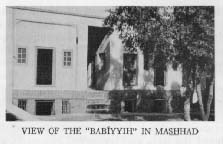
Mirza Muhammad Baqir-i-Qa'ini, who, for the remaining
years of his life, had established his residence in Mashhad,
was the next to embrace the Message. The love of the Bab
inflamed his soul with such a consuming passion, that no
one could resist its force or could belittle its influence. His
fearlessness, his unsparing energy, his unswerving loyalty,
and the integrity of his life, all combined to make him the
terror of his enemies and a source of inspiration to his friends.
Mulla Husayn, as soon as he had won to the Cause such
able and devoted supporters, decided to address a written
report concerning his activities to the Bab. In his communication
he referred at length to his sojourn in Isfahan and
Kashan, described the account of his experience with Baha'u'llah,
referred to the departure of the latter for Mazindaran,
related the events of Nur, and informed Him of the success
which had attended his own efforts in Khurasan. In it he
enclosed a list of the names of those who had responded to
his call, and of whose steadfastness and sincerity he was
assured. He sent his letter by way of Yazd, through the
trustworthy partners of the Bab's maternal uncle who were
at that time residing in Tabas. That letter reached the Bab
on the night preceding the twenty-seventh day of Ramadan,(1)
a night held in great reverence by all the sects of Islam
and regarded by many as rivalling in sacredness the Laylatu'l-Qadr
itself, the night which, in the words of the Qur'an,
"excelleth a thousand months."(2) The only companion of the
Bab, when that letter reached Him that night, was Quddus,
with whom He shared a number of its passages.
I have heard Mirza Ahmad relate the following: "The
Bab's maternal uncle himself described to me the circumstances
S THE Bab bade farewell to
the Letters of the Living, He instructed them, each and all, to record
separately the name of every believer who embraced
the Faith and identified himself with its
teachings. The list of these believers He bade them enclose
in sealed letters, and address them to His maternal uncle,
Haji Mirza Siyyid Ali, in Shiraz, who would in turn deliver
them to Him. "I shall classify these lists," He told them,
"into eighteen sets of nineteen names each. Each set will
constitute one vahid.(1) All these names, in these eighteen
sets, will, together with the first vahid, consisting of My own
name and those of the eighteen Letters of the Living, constitute
the number of Kull-i-Shay'.(2) Of all these believers
I shall make mention in the Tablet of God, so that upon
each one of them the Beloved of our hearts may, in the
Day when He shall have ascended the throne of glory, confer
His inestimable blessings, and declare them the dwellers of
His Paradise."
To Mulla Husayn, more particularly, the Bab gave
definite injunctions to send Him a written report on the
nature and progress of his activities in Isfahan, in Tihran,
and in Khurasan. He urged him to inform Him of those
who accepted and submitted to the Faith, as well as of those
who rejected and repudiated its truth. "Not until I receive
your letter from Khurasan," He said, "shall I be ready to
set out from this city on My pilgrimage to Hijaz."
Mulla Husayn, refreshed and fortified by the experience
of his intercourse with Baha'u'llah, set out on his journey to
Khurasan. During his visit to that province, he exhibited
in an astonishing manner the effects of that regenerating
power with which the parting words of the Bab had invested
Mirza Muhammad Baqir-i-Qa'ini, who, for the remaining
years of his life, had established his residence in Mashhad,
was the next to embrace the Message. The love of the Bab
inflamed his soul with such a consuming passion, that no
one could resist its force or could belittle its influence. His
fearlessness, his unsparing energy, his unswerving loyalty,
and the integrity of his life, all combined to make him the
terror of his enemies and a source of inspiration to his friends.
Mulla Husayn, as soon as he had won to the Cause such
able and devoted supporters, decided to address a written
report concerning his activities to the Bab. In his communication
he referred at length to his sojourn in Isfahan and
Kashan, described the account of his experience with Baha'u'llah,
referred to the departure of the latter for Mazindaran,
related the events of Nur, and informed Him of the success
which had attended his own efforts in Khurasan. In it he
enclosed a list of the names of those who had responded to
his call, and of whose steadfastness and sincerity he was
assured. He sent his letter by way of Yazd, through the
trustworthy partners of the Bab's maternal uncle who were
at that time residing in Tabas. That letter reached the Bab
on the night preceding the twenty-seventh day of Ramadan,(1)
a night held in great reverence by all the sects of Islam
and regarded by many as rivalling in sacredness the Laylatu'l-Qadr
itself, the night which, in the words of the Qur'an,
"excelleth a thousand months."(2) The only companion of the
Bab, when that letter reached Him that night, was Quddus,
with whom He shared a number of its passages.
I have heard Mirza Ahmad relate the following: "The
Bab's maternal uncle himself described to me the circumstances
 Mirza Ahmad, upon whom the account of this incident
had produced a profound impression, was determined to
fathom its mystery. "Not until I met Mulla Husayn in
Shiraz," he told me, "was I able to satisfy my curiosity.
When I repeated to him the account described to me by the
Bab's uncle, he smiled and said how well he remembered that
Mirza Ahmad, upon whom the account of this incident
had produced a profound impression, was determined to
fathom its mystery. "Not until I met Mulla Husayn in
Shiraz," he told me, "was I able to satisfy my curiosity.
When I repeated to him the account described to me by the
Bab's uncle, he smiled and said how well he remembered that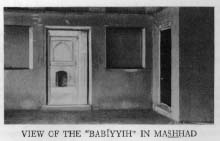 The references in Mulla Husayn's letter to Baha'u'llah's
immediate response to the Divine Message, to the vigorous
campaign which He had boldly initiated in Nur, and to the
marvellous success which had attended His efforts, cheered
and gladdened the Bab, and reinforced His confidence in the
ultimate victory of His Cause. He felt assured that if now
He were to fall suddenly a victim to the tyranny of His foes
and depart from this world, the Cause which He had revealed
would live; would, under the direction of Baha'u'llah, continue
to develop and flourish, and would yield eventually its
choicest fruit. The master-hand of Baha'u'llah would steer
its course, and the pervading influence of His love would
establish it in the hearts of men. Such a conviction fortified
His spirit and filled Him with hope. From that moment
His fears of the imminence of peril or danger entirely forsook
Him. Phoenix-like He welcomed with joy the fire of adversity,
and gloried in the glow and heat of its flame.
The references in Mulla Husayn's letter to Baha'u'llah's
immediate response to the Divine Message, to the vigorous
campaign which He had boldly initiated in Nur, and to the
marvellous success which had attended His efforts, cheered
and gladdened the Bab, and reinforced His confidence in the
ultimate victory of His Cause. He felt assured that if now
He were to fall suddenly a victim to the tyranny of His foes
and depart from this world, the Cause which He had revealed
would live; would, under the direction of Baha'u'llah, continue
to develop and flourish, and would yield eventually its
choicest fruit. The master-hand of Baha'u'llah would steer
its course, and the pervading influence of His love would
establish it in the hearts of men. Such a conviction fortified
His spirit and filled Him with hope. From that moment
His fears of the imminence of peril or danger entirely forsook
Him. Phoenix-like He welcomed with joy the fire of adversity,
and gloried in the glow and heat of its flame.


|